
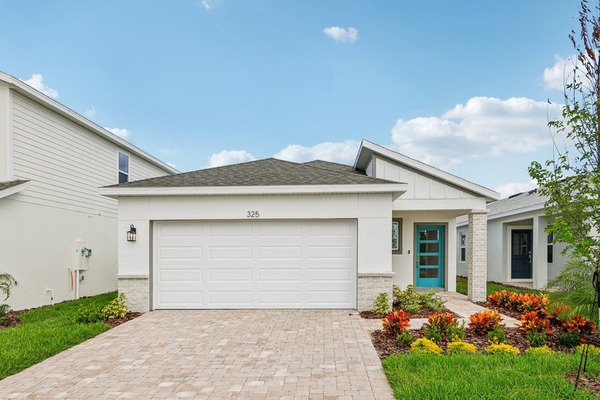
The most professional decision may have been what we did not shoot.
This vacant new-construction home did not need the largest media package available. It needed three specific tools to solve three specific visual problems.
It is easy to approach real estate media as a menu.
Photos. Drone. Video. Twilight. 3D. Floor plan.
The temptation is to assume that adding more services automatically creates a stronger listing.
This Winter Haven project was a good reminder that the opposite can also be true.
Every asset needs a job.
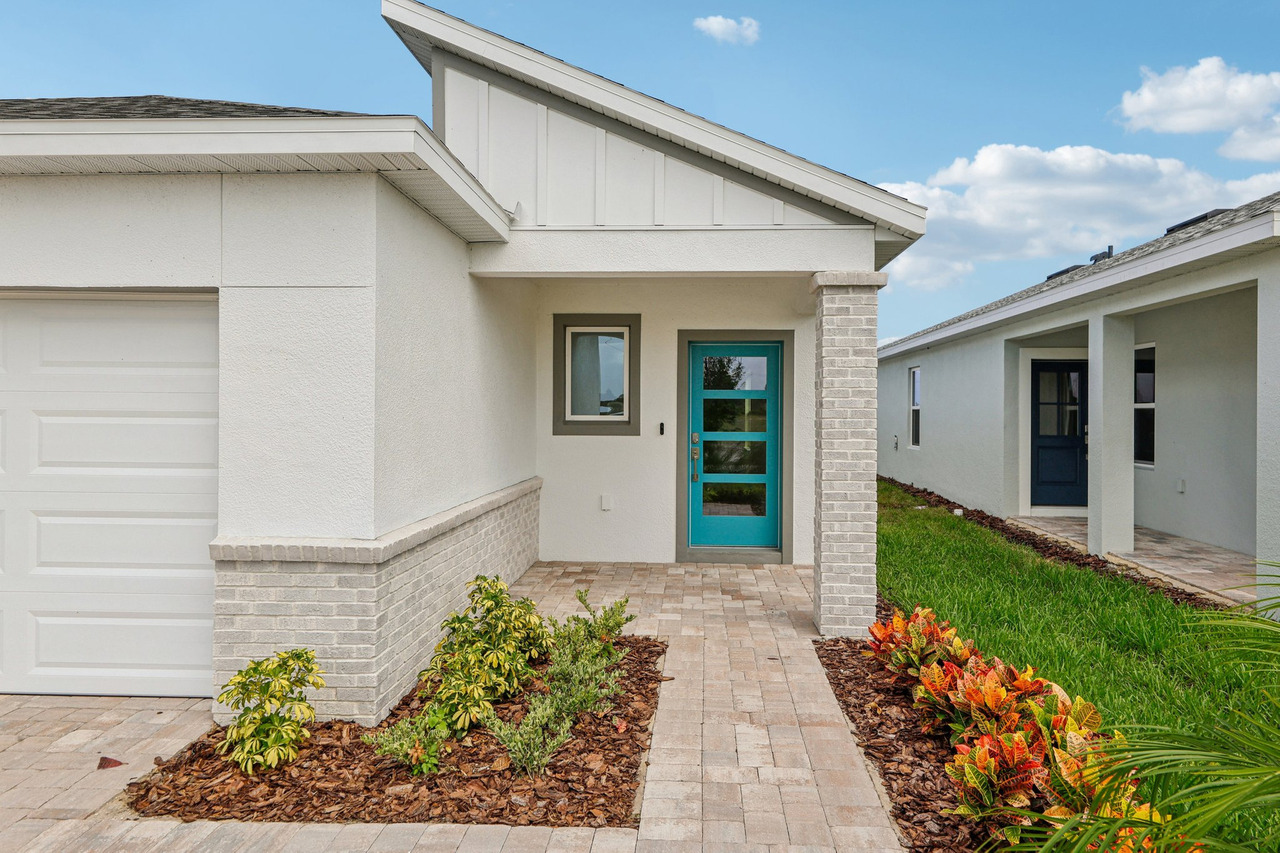 A straightforward new-construction exterior. The project did not contain acreage, waterfront or another obvious aerial story that required drone photography.
The Property Was Simple. The Media Decision Still Mattered.
The home at 325 Meredith Blvd in Winter Haven was newly built, vacant and ready to photograph.
At approximately 1,480 square feet, the single-story floor plan was not physically complicated.
the architecture is visible while the visual reference points are gone.
The challenge was not making the house look larger.
It was making an empty house easy to understand.
An Empty Home Removes Clutter—and Removes Scale
Furniture gives rooms visual reference.
A bed immediately helps someone estimate the size of a bedroom. A sofa gives context to a living area. A dining table communicates both scale and intended use.
Take those objects away and the photographer has to rely much more heavily on perspective, architectural lines, natural light and transitions between spaces.
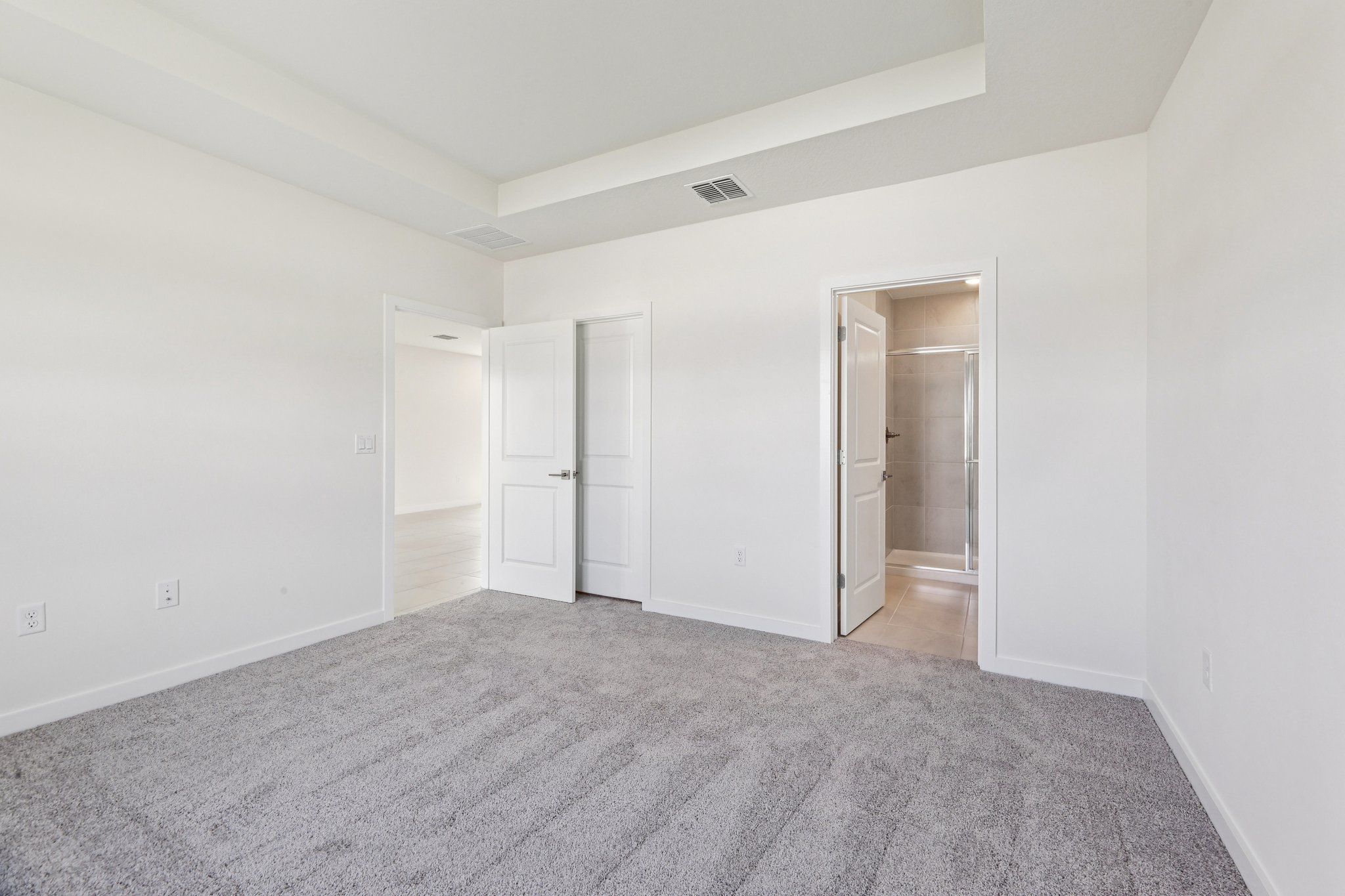
Without furniture providing scale, camera position and perspective become much more important.
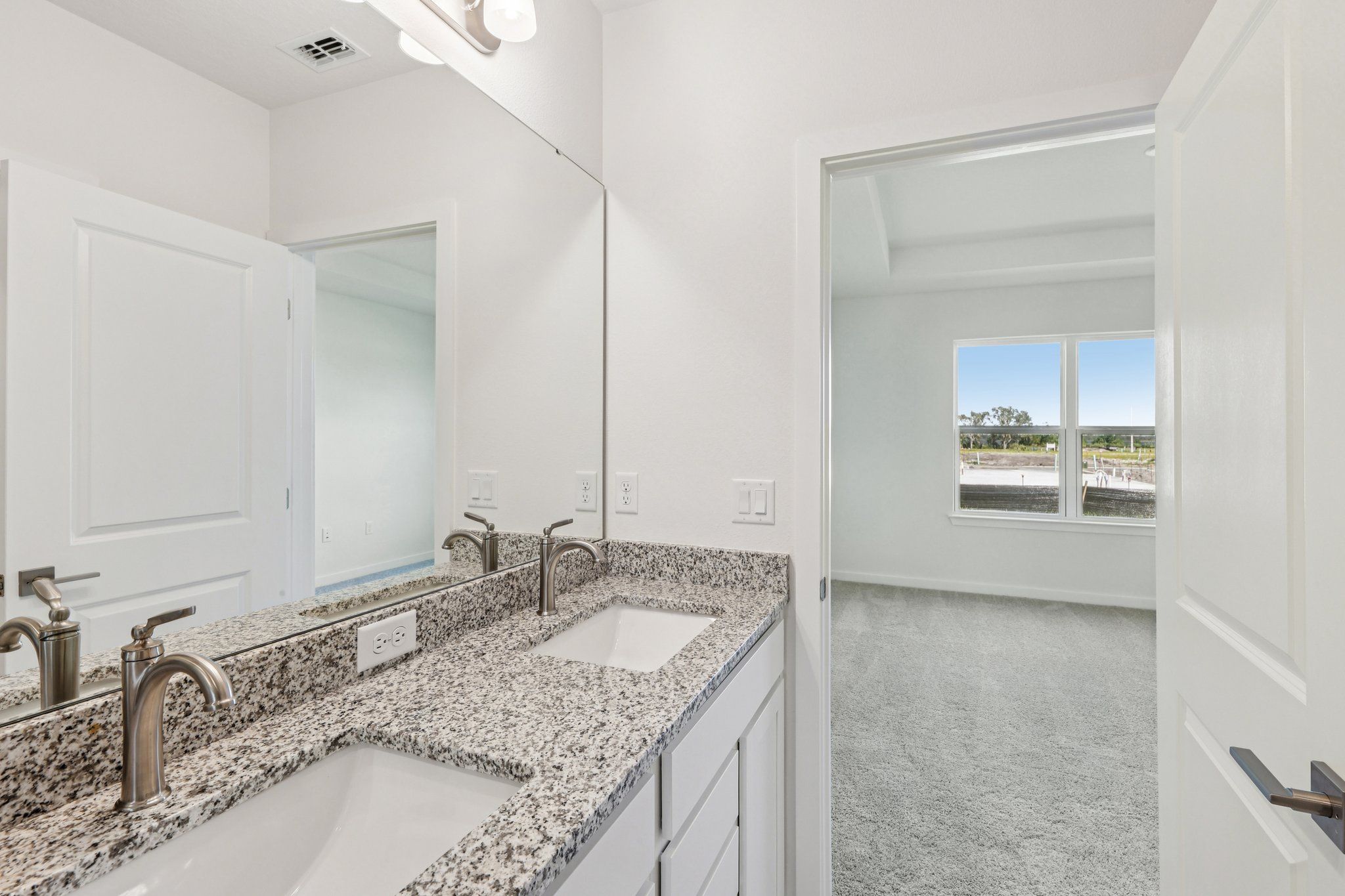
Secondary rooms still need the same color, exposure and perspective consistency as the strongest spaces.
Vacant rooms are where excessive wide-angle photography can become especially misleading.
There is less furniture available to reveal that the proportions have been stretched. I would rather let a bedroom look appropriately sized than create the wrong expectation before a showing.
The Media Plan Started With a Walkthrough
Before I began shooting, I walked through the property and looked at the exterior, backyard, main living spaces and overall flow.
That walkthrough answered an important question.
There was no acreage, waterfront, major neighborhood relationship or unusual lot configuration that required explanation from the air.
The strongest visual story was inside the home.
Can I produce this asset?
Will this asset help explain the property?
Three Assets Earned a Place. Three Did Not.
That distinction became the media strategy for the entire shoot.
The primary gallery needed to show the exterior, kitchen, living spaces, bedrooms and bathrooms clearly and consistently.
A self-guided experience gave buyers another way to explore empty rooms and transitions between spaces.
The floor plan translated separate rooms into one understandable spatial map.
There was no meaningful aerial story that justified adding another perspective simply because drone was available.
The home's strongest presentation was its clean daytime new-construction appearance rather than evening architecture.
Photography and spatial media already addressed the most important visual questions for this particular property.
More media would have created a larger package.
It would not automatically have created more useful information.
Photography Had to Give the Empty Rooms Structure
Vacant homes can look clean and simple in photographs.
They can also become repetitive very quickly.
Without furniture, architectural openings, windows, doorways, walls and the relationships between rooms become the composition.
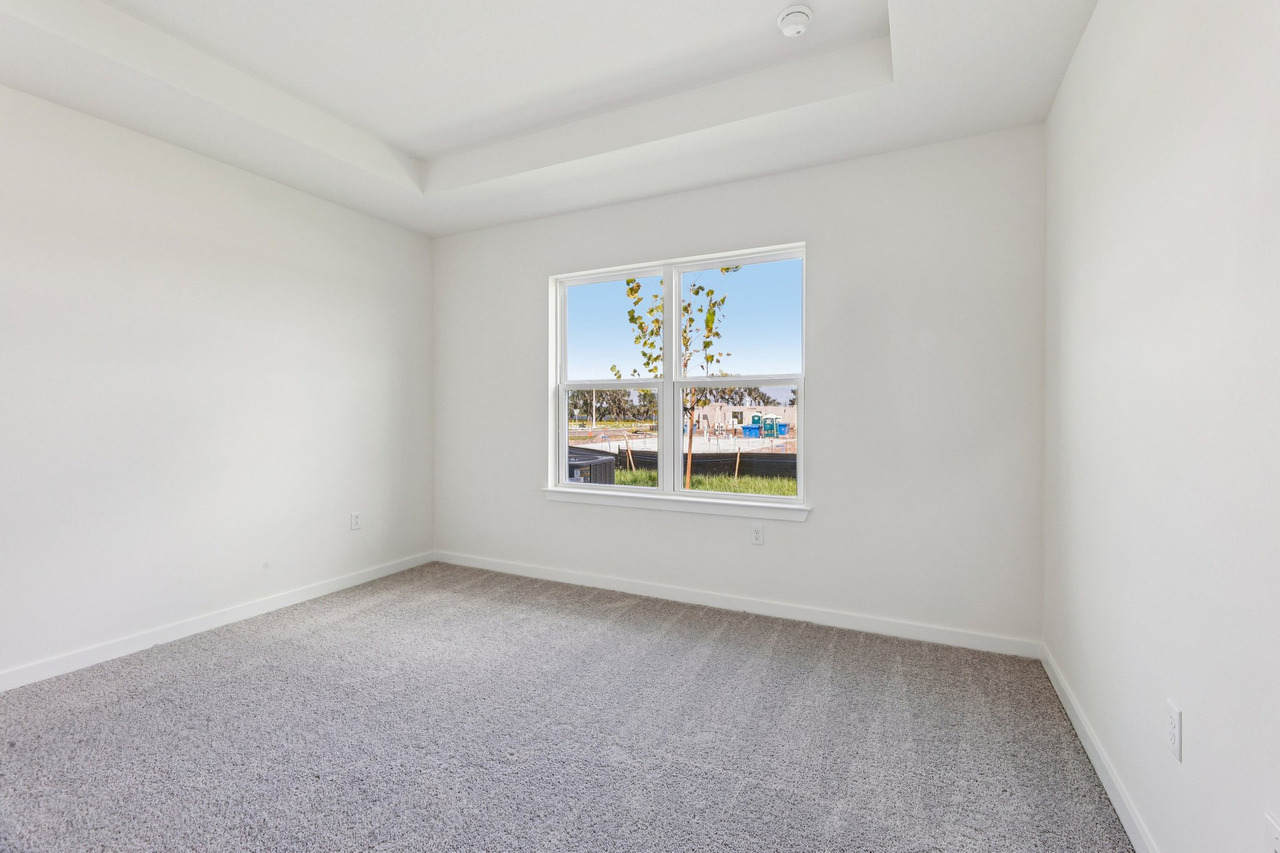 In a vacant home, architecture becomes the visual guide. Camera position has to help the viewer understand both the room and where it leads.
It should not manufacture space.
The Kitchen Became the Visual Anchor
The kitchen gave the interior gallery more visual structure than the empty secondary rooms.
White cabinetry, granite surfaces, stainless appliances and the island created both a strong feature photograph and an opportunity to explain how the kitchen related to the living area.
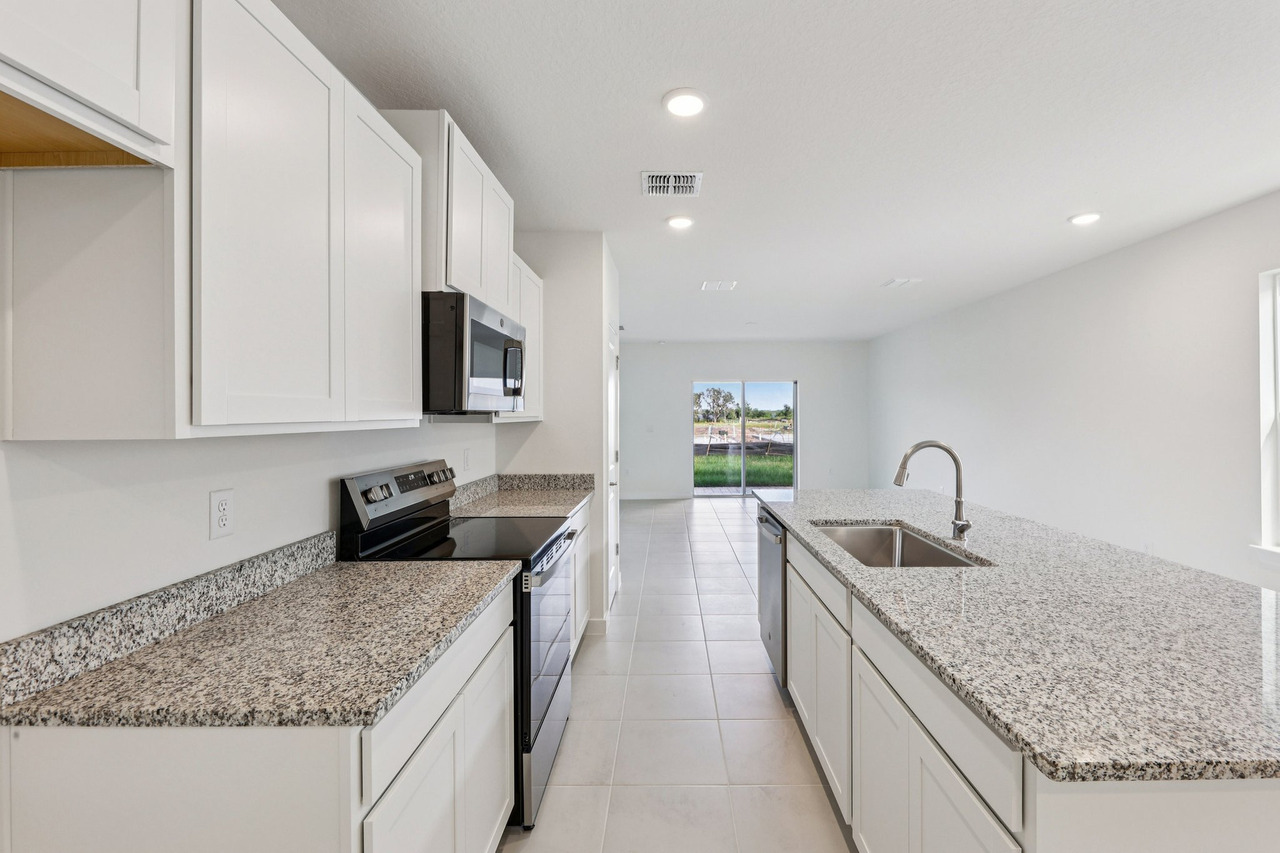 The first kitchen frame establishes the feature: cabinetry, appliances, island and finishes.
The visual priority becomes the kitchen itself: cabinetry, island, countertops and appliance layout.
A second frame earns its place when it explains how the kitchen connects to adjacent living space.
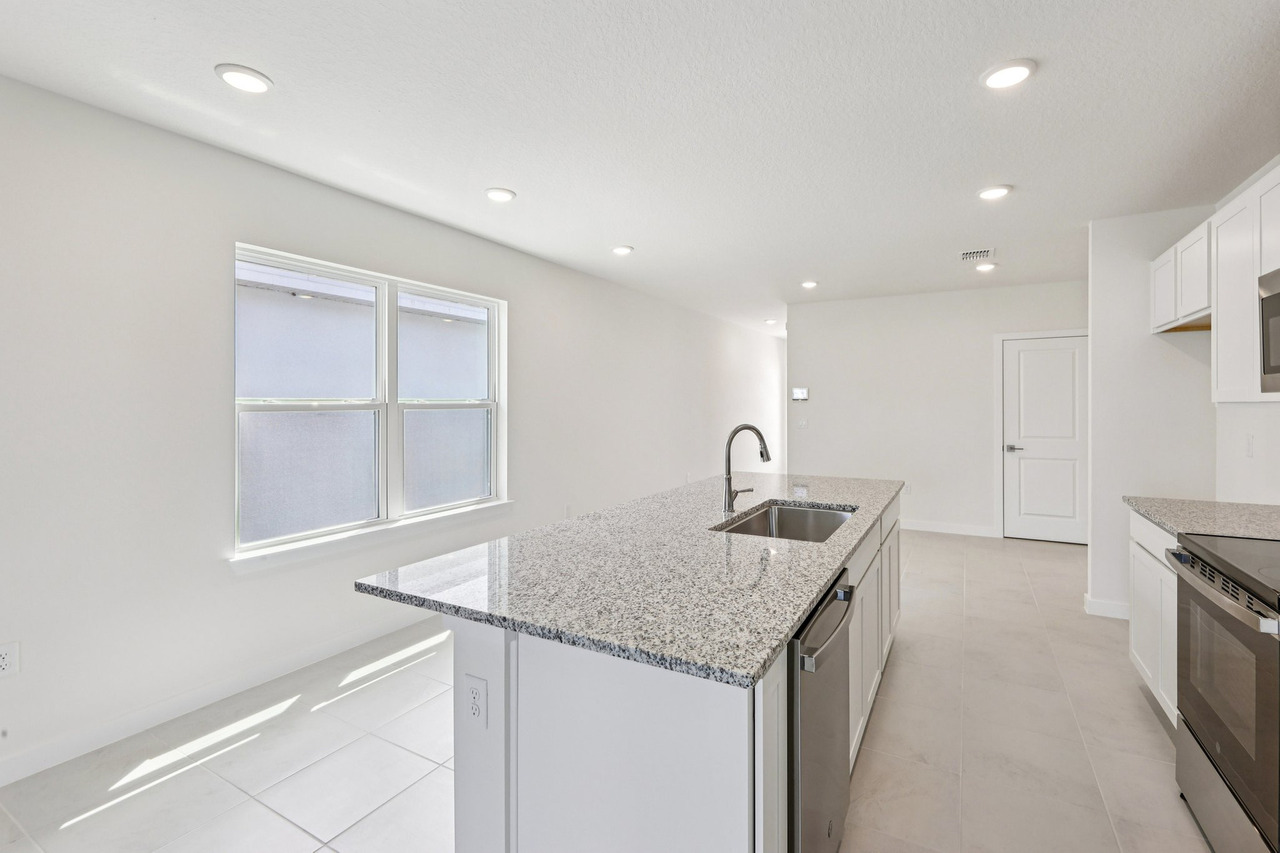 The second composition adds information rather than simply repeating a successful kitchen angle.
The Floor Plan Answered a Question Photography Could Not
A photo gallery can show every room successfully and still leave the buyer reconstructing the layout mentally.
That is especially common when rooms are empty and visually similar.
“What does this space look like?”
“Where is this space?”
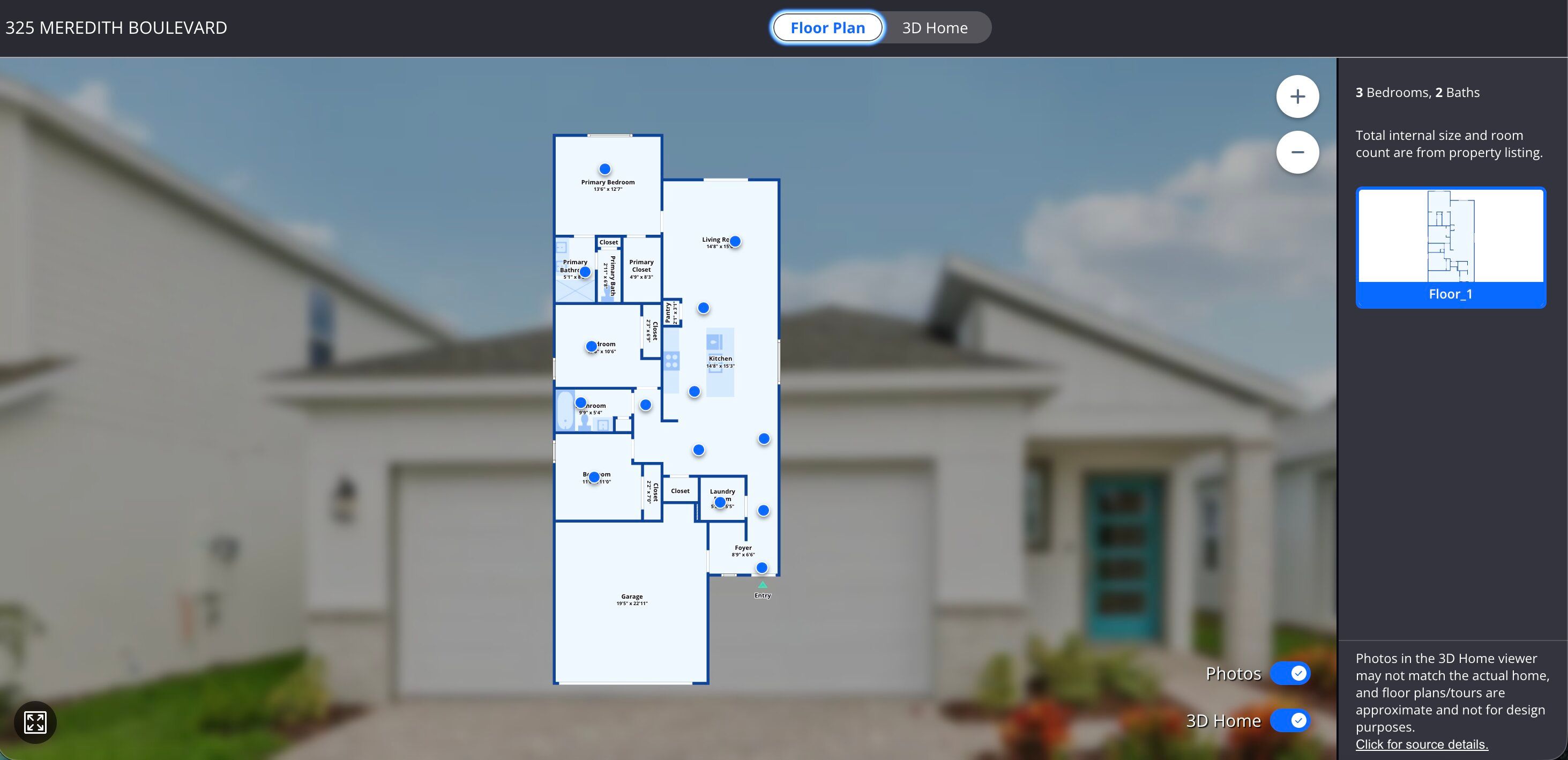
That is why I do not see the floor plan as a duplicate of the photo gallery.
It performs a different job.
The 3D Tour Gave Control Back to the Viewer
Photography is intentionally curated.
I choose the camera position and create the visual sequence.
A 3D tour changes that relationship.
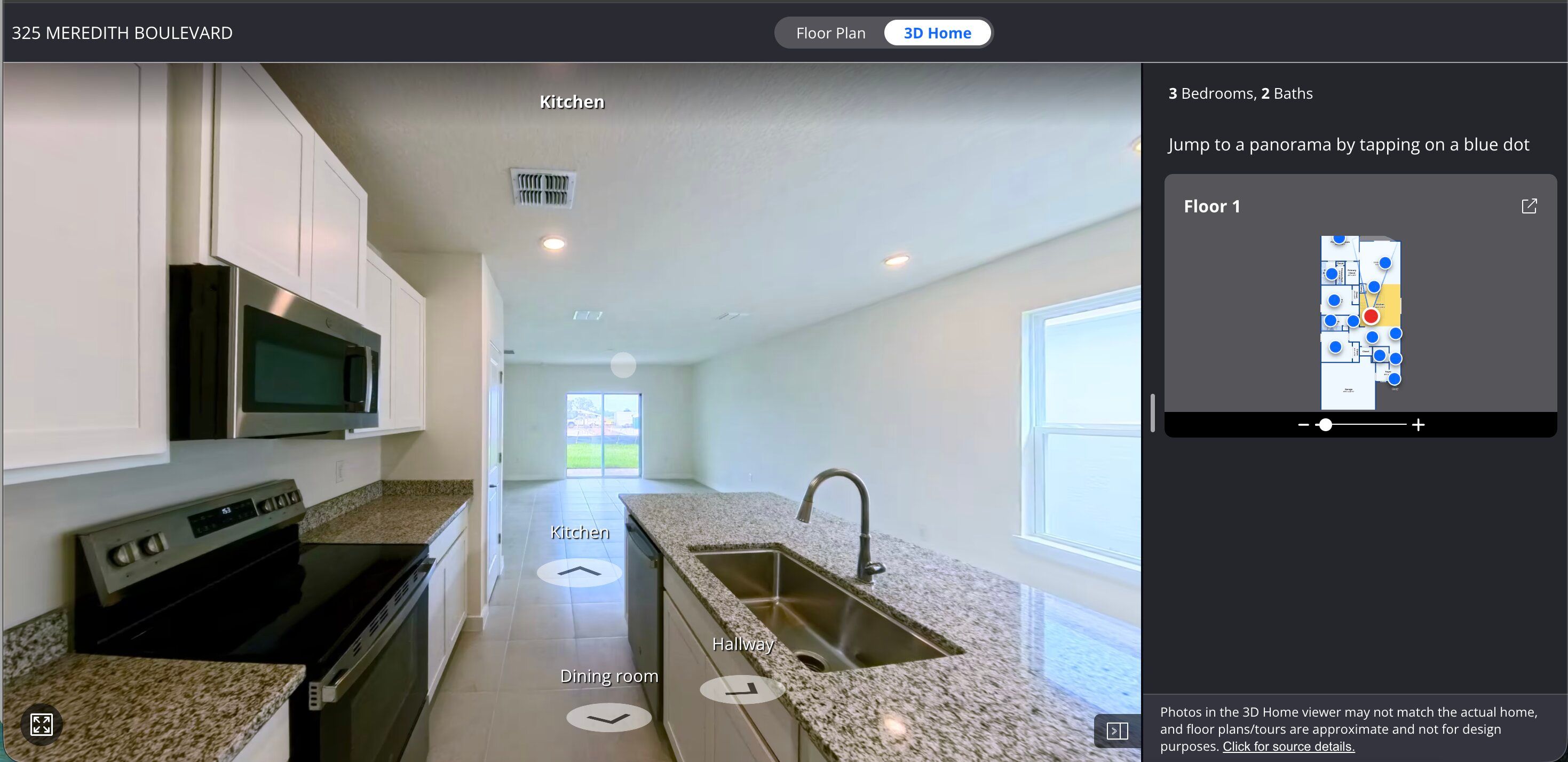
The photographer creates a deliberate sequence of strong viewpoints.
The buyer controls movement and can revisit rooms in whatever order makes sense to them.
The Complete Capture Took Just Over One Hour
The house was approximately 1,480 square feet, vacant, clean and ready when I arrived.
That allowed the photography, 3D capture and floor-plan work to be completed in a little over one hour.
That number should not be treated as a universal benchmark.
Occupied spaces, preparation problems, larger properties, complex exteriors or additional media can change production time considerably.
Efficiency is not moving as quickly as possible.
It is removing work that does not improve the final result and spending time where the property actually needs it.
The Market Result—and the Claim I Will Not Make
The property eventually went under contract and sold.
That is factual.
What this project does not prove is that photography, a floor plan or a 3D tour caused the transaction or caused it to happen within a specific number of days.
It does not control the market.
Price, inventory, financing, negotiations, location, demand and many other variables remain outside the photographer's control.
That is why I would rather remove a dramatic marketing claim than keep a headline the evidence cannot support.
What this project does demonstrate is more useful anyway:
A simple new-construction property received a focused media package in which every selected asset had a clear reason to exist.
Six Lessons I Would Carry Into the Next Listing
Understand the actual property before deciding which media belong in the package.
Empty rooms make perspective, proportion and room relationships more important.
Drone should reveal useful context—not simply create another angle.
Photography, floor plans and 3D tours answer different questions.
Additional services have value only when they contribute new information.
Media presentation may be strong without pretending it single-handedly caused a sale.
It needed the right media.
Before Adding Another Media Service, Ask:
- What question does this asset answer?
- Can photography already communicate the same information?
- Is spatial understanding a problem?
- Does the exterior have an aerial story?
- Does movement add information?
- Would twilight materially change the presentation?
Frequently Asked Questions
Does every new-construction listing need drone photography?
No. Drone photography is useful when aerial perspective explains important property or community context. A standard residential lot without a meaningful aerial story may not benefit enough to justify it.
Why use a floor plan on a 1,480-square-foot home?
Property size does not eliminate the need to understand layout. The floor plan immediately shows how bedrooms, bathrooms and living areas relate to one another.
Why add a 3D tour to an empty home?
A 3D tour gives the viewer control over exploration and can help clarify room relationships that are harder to infer from a vacant photo gallery.
Are vacant homes easier to photograph?
They eliminate clutter and furniture-management problems, but empty rooms remove many of the visual cues people normally use to understand scale.
Did the professional media cause this home to sell?
This case study does not make that claim. Professional media influences listing presentation, while the transaction itself depends on many variables outside the photographer's control.
How long did this particular session take?
Photography, 3D capture and floor-plan work were completed in a little over one hour because the approximately 1,480-square-foot home was vacant, clean and ready for the session.
Continue the strategy beyond this property.
Choose the next resource based on the question you are solving: media selection, new-construction presentation, portfolio quality or planning your own listing.
Do Not Start With the Package. Start With the Property.
A new-construction listing may need photography, video, drone, 3D, floor plans or twilight.
It may also need only some of them.
If you have an upcoming listing or new-construction project in Winter Haven, Orlando or Central Florida, send me the property and we can build the coverage around what buyers actually need to understand.

Gustavo Sousa
Gustavo Sousa is a professional real estate photographer, videographer and FAA Part 107 Certified Remote Pilot based in Winter Garden, Florida.
A professional photographer since 2012, he works with Realtors, residential listings, new construction, builders, vacation homes and real estate projects throughout Orlando and Central Florida.